|
IWMP
(Integrated Watershed Management Plan)
State of The
Watershed First Draft Reports Have Been Released
State of the
watershed draft reports have been released for three of the four
watersheds involved with the current IWMP process. The next step in the
process will be for the Watershed Planning Advisory Teams to fine tune the
draft document and present the draft to the public for input before
the final Watershed Plan is finalized and released.
The
Little Saskatchewan River; Upper Assiniboine River and Lake of the
Prairies Conservation District Boards have agreed to facilitate the
preparation of integrated watershed management plans (IWMP's) for four
watersheds in the Assiniboine River Basin to help set future direction and
priorities for the watershed. The challenge is to target limited funds
into high quality programs and projects that maximize benefits to the
social, economic and environmental elements of the watershed. The Boards
have requested designation as Water Planning Authorities (WPA) under The
Water Protection Act to play a lead role in the plan preparation. Public
participation and broad stakeholder involvement is a high priority in this
process.
This
Terms of Reference outline how the four IWMP's are to be prepared
including budget, process and expected outcomes and will serve to guide
the process of plan preparation.
Note:
Four Integrated Watershed Management Plans will be prepared concurrently
within one process with four separate Water Planning Authorities in the
Assiniboine River Basin. They are the Arrow/Oak River WPA;
Birdtail/Assiniboine West WPA; Shell
River WPA and Little Saskatchewan River WPA. The facilitation of four
concurrent integrated watershed planning processes is intended to save
time, money and maximize watershed planning efficiencies
PURPOSE
OF AN INTEGRATED WATERSHED MANAGEMENT PLAN
The
purpose of the plan is to:
- Promote a planned
and coordinated approach to delivering watershed management programs
from a community perspective.
- Prepare a State of
the Watershed Report to set in place the ability to measure and
monitor watershed management programs and ultimately watershed health.
- Educate residents
about sustainable land use in the watershed and promote a sense of
watershed community
- Encourage broad
based public participation by all citizens and agents with a stake in
the watershed in the preparation of the watershed plan..( by the
people..for the people)
- Provide the CD
Boards with an overall focus and set priorities to help justify the
need for targeted, measurable watershed programs with overall
community benefits.
- Help sub-watershed
committees of the CD's and other community NGO's set program
strategies in an overall planned watershed approach.
UARCD Has Solar Watering Systems Available To Try Before You Buy
Solar powered piston pump at Tokaryk Lake

Solar powered Float Pump at Shaw's
The district now has three solar powered
watering systems that are available for demonstrations and to allow
landowners a chance to try these new alternative watering systems. One
system is a piston pump capable of pumping long distances with a maximum
vertical lift of 200 feet. The others are float pumps with the ability to
lift 20 and 40 vertical feet and shorter distances. The systems were
set up
and used at several locations last year. Please contact the office if
you
are interested in trying one of these systems next season.
Annual MCDA Convention Held in Brandon
The 32nd annual convention "Our
Landscape-What does the future hold?" was held at the Keystone Centre
in Brandon on December 11 & 12th. I wide variety of speakers and
presentations were held for CD board memebers and staff to attend.
The keynote speaker was Gerri Kamenz –
Chair of the Ontario Federation of Agriculture.Geri Kamenz is serving his
first term as OFA President after serving three years as OFA Vice President
and the previous three years as a member of the Executive Committee.
His farming operation consists of 850
acres of corn, soybean, small grains, specialty beans, pedigreed seed
production and 200 acres of hay. The livestock part of the farm is and
intensive livestock operation that produces swine seed-stock for the
domestic and export market, as well as a purebred and commercial cow-calf
and feed lot.
Geri farms near Spencerville. He and his
wife Heather have two daughters, Zoe and Erika. Their farm, "Buckstop
Farms" was host to Prime Minister Chrétien’s unveiling of the
Agriculture Policy Framework in June, 2002. Prior to farming, Geri was an
Air Force officer and pilot.
The Honourable Christine Melnick-Minister
of Water Stewardship also presented and met with convention members.
Highlights were presentations to Water Stewardship grant recipients and the
release of the Conservation Districts Framework
for the Future discussion document .
Closing speaker was Lonnie Dupre-Polar Explorer, Writer, Photographer, Environmentalist and Educator.
For more information on this dynamic speaker please go to the following web
sites. www.oneworldexpedition.com
www.lonniedupre.com.
The Upper Assiniboine River CD
conservation award was presented in memory of Wayne Basso. Link to UARCD
Conservation Award Page.
From all reports the convention was well
recieved and a great time was had by all.

The three wise men 2007.
Something to think about.............................
|
Annual
CD Supper Held In Miniota On April 10, 2008 The conservation
district recently held our annual supper at The
Miniota Community Hall. Speakers
for the evening include: Ryan Canart CD Manager-"2007 In
Review": Jolene Hodgins(2007 UARCD Youth Speaker)-"Going
Green". Our special Guest
Speaker is Lonnie Dupre, Polar Explorer-"One World
Expedition". For more information check out Lonnie's
website at www.lonniedupre.com or
www.oneworldexpedition.com
. Anyone who has seen Lonnie's presentation knows it is very exciting and
motivating, please make plans to join us. Lonnie also gave presentations at several area schools in south western Manitoba. 
Streambank Stabilization Projects
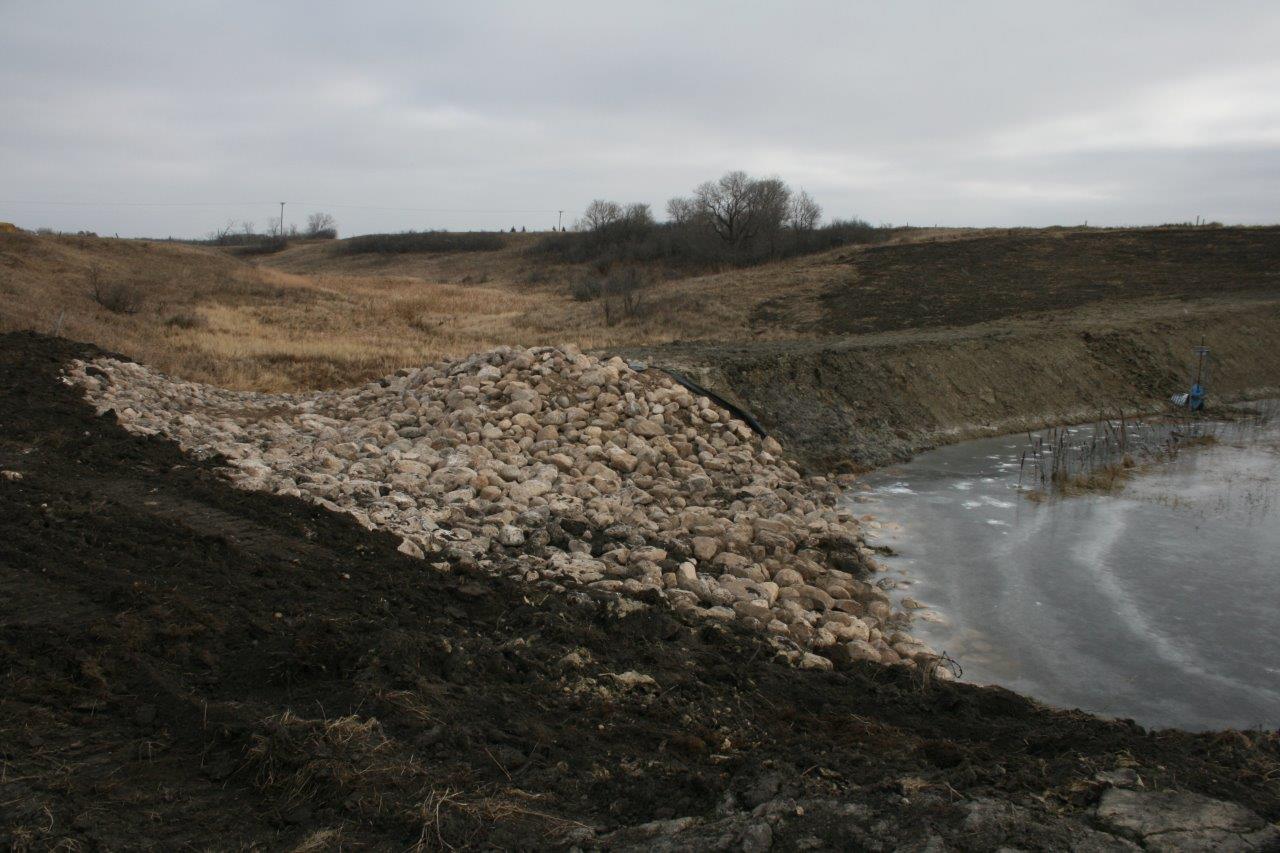
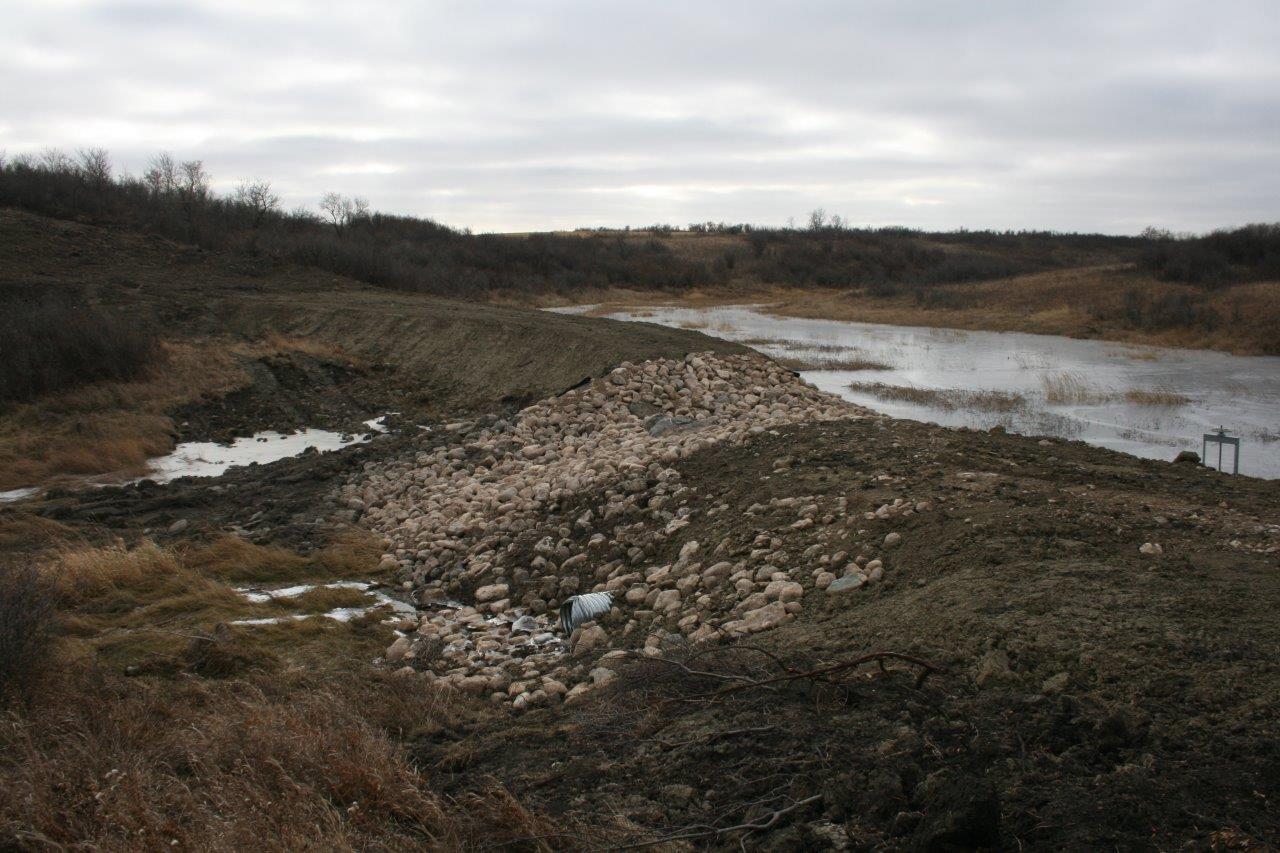
The
CD has had a great deal of success over the past few years with streambank
and riparian restoration projects throughout the CD. A variety of
different techniques are used, usually a combination of traditional rock
armour and various bioengineering techniques.
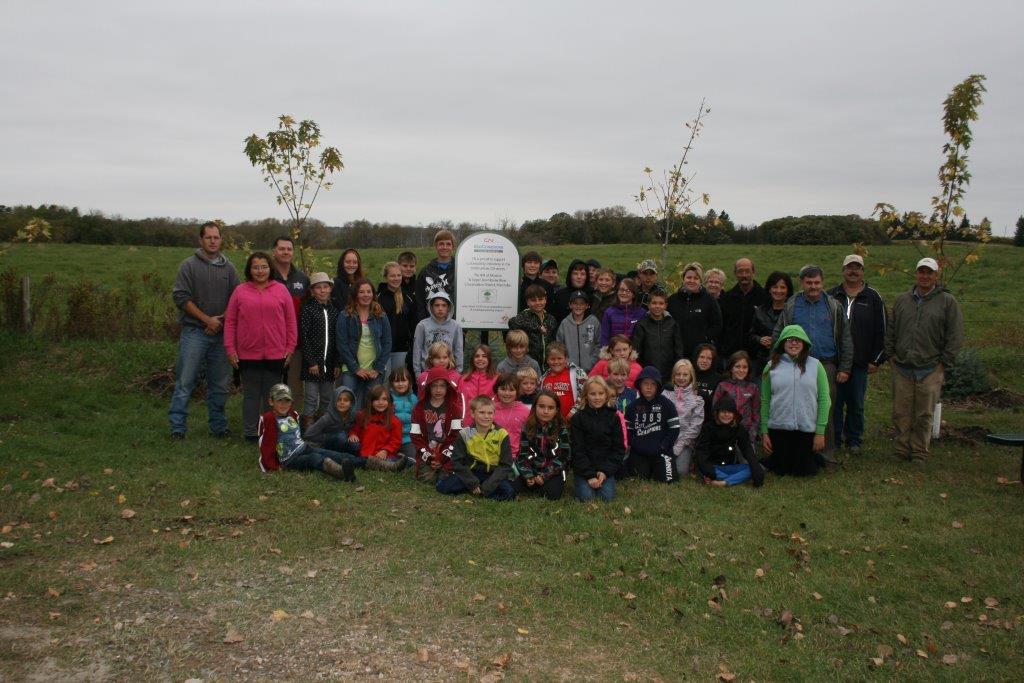
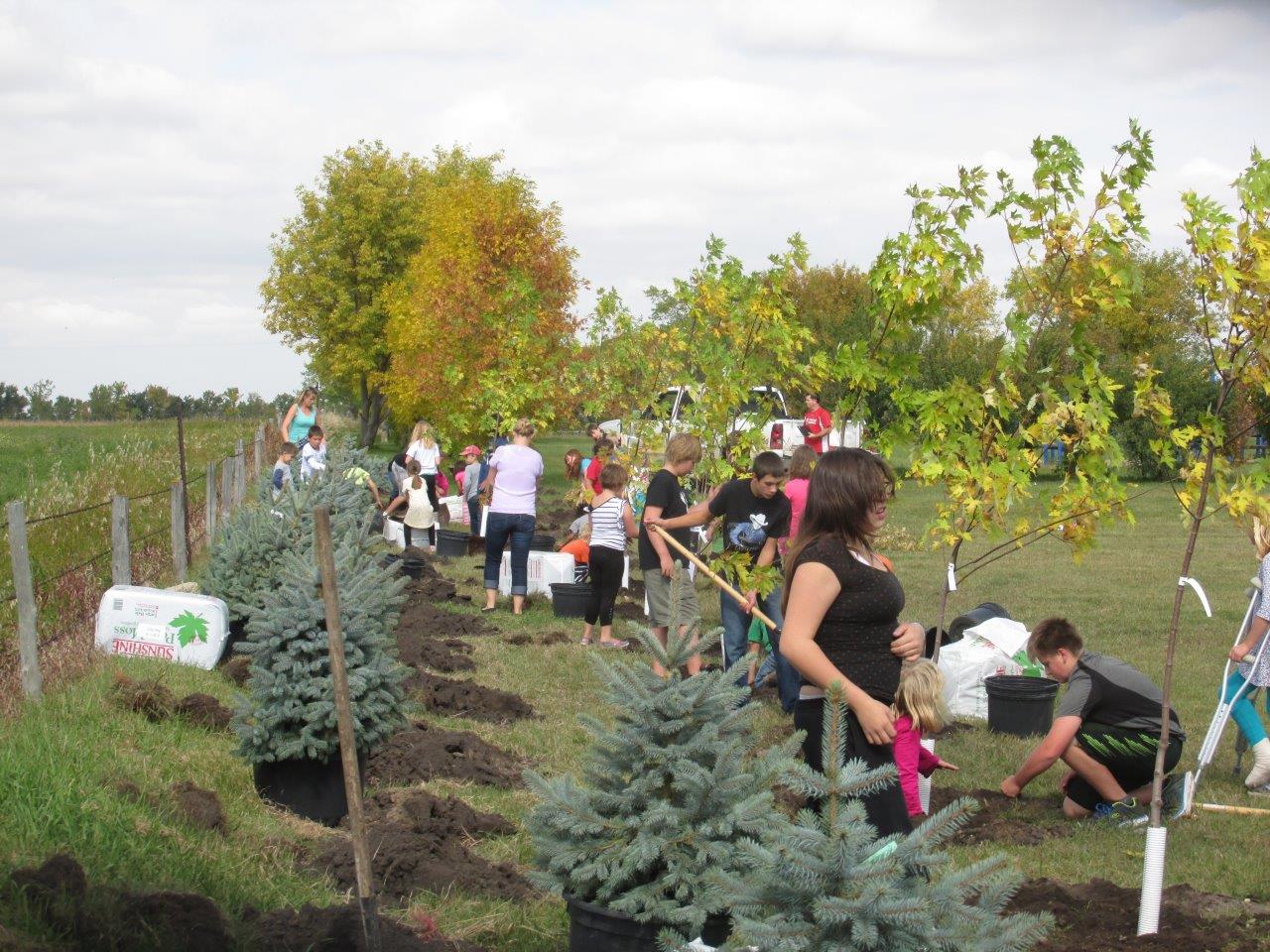
Getting Out With Students In Our
Riparian Tree Planting Programs

Elkhorn Students planting along the
Bosshill Creek

Rossburn Students in the Livetsky Runway

UARCD Receives Shell
Environmental Fund Grant In 2007
In 2007, thousands of
Canadians continue to take personal action to improve and protect the
Canadian Environment. From
conservation projects to community clean ups, wildlife rehabilitation,
educational initiatives and recycling projects, Shell Canada recognizes
the need for financial assistance to help these Canadians to turn their
environmental ideas into actions. The Upper Assiniboine River
Conservation District has recently received a grant from the Shell
Environmental Fund to undertake several riparian restoration and education
projects.
Several
local schools and organizations within the UARCD expressed an interest in
working with the Conservation District to promote the importance of
healthy areas around creeks, streams and lakes. Presentations were made
on the basics of riparian areas and their functions. Participants and
staff also undertook the onsite rehabilitation of a local riparian
area by planting appropriate trees and shrubs. It is well known that
healthy riparian areas protect and stabilize shorelines, and provide a
filter for runoff entering the watercourse thus improving water quality
for downstream users, fish and wildlife. Schools in Rossburn,
Elkhorn, and
Virden participated in 2007.
Created in 1990, the Shell
Environmental Fund is a national program intended to make a local
difference. Over $9.8 million
has been granted to various innovative environmental projects across the
country. Individuals,
schools, community associations, service clubs and environmental groups
have used the grants, of up to $5,000 per project, to improve and protect
their environment.
The
Shell Environmental Fund accepts applications for projects that are
action-oriented, innovative, and community-based.
Applications are reviewed twice per year, with deadlines annually
of February 28 and September 15. To
make the funding decisions, Shell has a decision-making panel comprised of
individuals from environmental organizations and government.
For information about
the Shell Environmental Fund, or to see if your project will qualify,
visit the SEF web site at www.shell.ca/sef
or call the Shell Environmental Fund office at 1-403-691-2071.
|